 Body Awakening Journey

Your nervous system is built to protect you. When it senses a threat it shifts you into fight, flight or freeze, and once the threat passes it is meant to settle again. Long-term stress, pain, injury or difficult experiences can leave it stuck on alert, even when nothing is wrong. That is what people mean by survival mode.
Quick answer
A nervous system stuck in survival mode keeps the body’s stress response switched on after the stress has passed. The seven most common signs are feeling tired but wired, constant muscle tension, shallow breathing, being easily overwhelmed, unsettled digestion, feeling numb or disconnected, and rest that doesn’t restore you. Regular body-based practices such as a longer exhale, gentle movement, touch and grounding help the nervous system learn to settle.
What is survival mode?
Survival mode is a state in which the body stays on alert to protect itself, even when there is no immediate danger. It is driven by the autonomic nervous system, the part of the nervous system that runs automatically, without conscious thought.
The autonomic nervous system has two main branches. The sympathetic branch mobilises you for action: your heart rate rises, your muscles tense and your breathing quickens, ready to fight or run. The parasympathetic branch brings you back to rest: it slows your heart, deepens your breath and supports digestion, sleep and repair. When stress is overwhelming or goes on for too long, the body can also drop into a freeze or shutdown response, which lowers energy and dulls feeling.
A healthy nervous system moves flexibly between these states. In survival mode it gets stuck in the protective ones. Survival mode is not a medical diagnosis. It is a pattern your body has learned, and patterns can be unlearned.
7 signs your nervous system is stuck in survival mode
You don’t need to recognise all seven. Most people notice two or three that feel familiar.
1You’re tired but wired
What it feels like: You feel exhausted all day, then lie awake at night with your mind racing.
Why it happens: Your stress response is still switched on. The body keeps producing alertness when it should be winding down, so sleep is light and rest never quite arrives.
2Your muscles never fully relax
What it feels like: A clenched jaw, raised shoulders, a stiff neck or tight hips, often without you noticing until it becomes pain.
Why it happens: When the body stays in a protective state, muscles and the fascia around them brace for a threat that never comes. Over time that bracing becomes your normal.
3Your breathing stays high and shallow
What it feels like: You breathe mostly into your upper chest, or catch yourself holding your breath.
Why it happens: Fast, shallow breathing is part of the body’s stress pattern. Slow breathing that reaches the diaphragm is one of the most direct ways the body signals that it is safe.
4Small things feel big
What it feels like: You startle easily, sounds feel too loud, or minor problems trigger a reaction that feels out of proportion.
Why it happens: A system already running close to its limit has little capacity left to absorb everyday stress, so small triggers tip it over.
5Your digestion is unsettled
What it feels like: Bloating, a knotted stomach, a poor appetite or digestion that changes without a clear cause.
Why it happens: Digestion belongs to the body’s rest-and-digest state. Under ongoing stress it is given lower priority, so it rarely runs smoothly.
6You feel numb, flat or disconnected
What it feels like: Brain fog, low motivation, emotional flatness or going through the motions.
Why it happens: Survival mode isn’t always loud. After long periods of stress the body can move into a freeze or shutdown response, which lowers energy and dulls feeling as a form of protection.
7Rest doesn’t restore you
What it feels like: A weekend off or a holiday helps for a day or two, then the tension, tiredness or pain comes back.
Why it happens: Rest on its own doesn’t teach the body how to let go. When the pattern is held physically, it usually needs to be released physically too.
The signs at a glance
| Sign | What you might notice | What’s happening in the body |
|---|---|---|
| 1. You’re tired but wired | Exhausted but can’t switch off | Stress response still active at night |
| 2. Your muscles never fully relax | Jaw, neck, shoulder or hip tension | Muscles and fascia bracing for protection |
| 3. Your breathing stays high and shallow | Chest breathing, breath-holding | Breathing locked into a stress pattern |
| 4. Small things feel big | Startle easily, irritable, overwhelmed | Little capacity left to absorb stress |
| 5. Your digestion is unsettled | Bloating, knotted stomach | Rest-and-digest given lower priority |
| 6. You feel numb, flat or disconnected | Brain fog, flatness, disconnection | Freeze or shutdown response |
| 7. Rest doesn’t restore you | Holidays help briefly, then it returns | Pattern held in the body, not just the mind |
Why does the nervous system get stuck in survival mode?
The nervous system adapts to what it experiences. When stress is ongoing, the body learns to stay ready, and over time readiness becomes its default setting. Common reasons include:
- Ongoing stress at work, at home or in relationships, with little time to recover between demands.
- Chronic pain or injury, which keeps the body guarding and bracing.
- Difficult or traumatic experiences that the body hasn’t had the chance to process.
- Poor sleep, which reduces the body’s capacity to recover from stress.
- Habitual posture and breathing patterns that keep the body in a tense, shallow-breathing state.
Because these patterns live in the body, in muscles, fascia, breath and posture, they often continue even when life calms down. That is why understanding them intellectually rarely changes how you feel.
How to get out of survival mode: 6 body-based practices
You can’t think your way out of survival mode, because it isn’t happening in your thoughts. These practices give your body a direct, physical experience of safety. Small and often works better than occasional and intense.
Lengthen your exhale
Breathe in gently through your nose for a count of four, then breathe out slowly for six to eight. A longer out-breath encourages the body to shift towards rest. A few minutes, a few times a day, is enough to start.
Move gently every day
Slow, mindful movement such as stretching, walking or mobility work releases held tension and reminds the body it is free to move. Aim for ease, not effort.
Release tension through touch
Calm, skilled touch helps tissue that has been bracing for a long time to soften. Self-massage and fascia release techniques are simple ways to begin at home.
Orient and ground yourself
Feel your feet on the floor and let your eyes slowly take in the room around you. Noticing that you are safe in the present moment helps the nervous system stand down.
Build a steady rhythm
Regular sleep, meals and moments of rest give the nervous system predictability, which it reads as safety. Consistency matters more than intensity.
Work with a somatic practitioner
A trained practitioner can help you find and release the patterns you can’t feel on your own, and show you practices that suit your body.
Start in your body
Try it with a free course
The free Discover Body Awakening course introduces simple practices with Mario Zinou for releasing tension and calming your nervous system at home.
When to get professional support
Body-based practices are a powerful way to support your nervous system, but they aren’t a replacement for medical care. Speak with your doctor or a qualified health professional if you are living with persistent pain, ongoing anxiety or low mood, sleep problems that don’t improve, or any symptom that worries you. Somatic work can sit alongside that support.
Frequently asked questions about survival mode
What does it mean when your nervous system is stuck in survival mode?
It means your body’s stress response, fight, flight or freeze, stays switched on after the stress has passed. Instead of returning to a calm, rested state, the body keeps preparing for a threat. This shows up as tension, poor sleep, shallow breathing, irritability, unsettled digestion or feeling numb.
What is a dysregulated nervous system?
A dysregulated nervous system is one that struggles to move smoothly between alertness and rest. It may stay on high alert, drop into shutdown, or swing between the two. It is a description of a pattern rather than a medical diagnosis.
How long does it take to get out of survival mode?
It varies from person to person. Many people notice small changes quickly, such as easier breathing or deeper sleep, while patterns held for years usually ease over weeks and months of consistent, gentle practice.
Can stress be stored in the body?
The body learns patterns. Long-term stress can show up as habitual muscle tension, restricted fascia, shallow breathing and a nervous system that stays on alert. Somatic approaches work by releasing these physical patterns directly.
Is survival mode the same as anxiety?
They overlap but aren’t the same. Survival mode describes how the body responds to ongoing stress, while anxiety is a condition that can be diagnosed. If anxiety is affecting your daily life, speak with your doctor or a mental health professional.
Can somatic healing help a nervous system stuck in survival mode?
Somatic healing works through the body rather than only the mind, which is where survival mode is held. Many people find it helpful alongside other support. The Body Awakening Method combines fascia release, breathwork, movement and nervous system regulation.
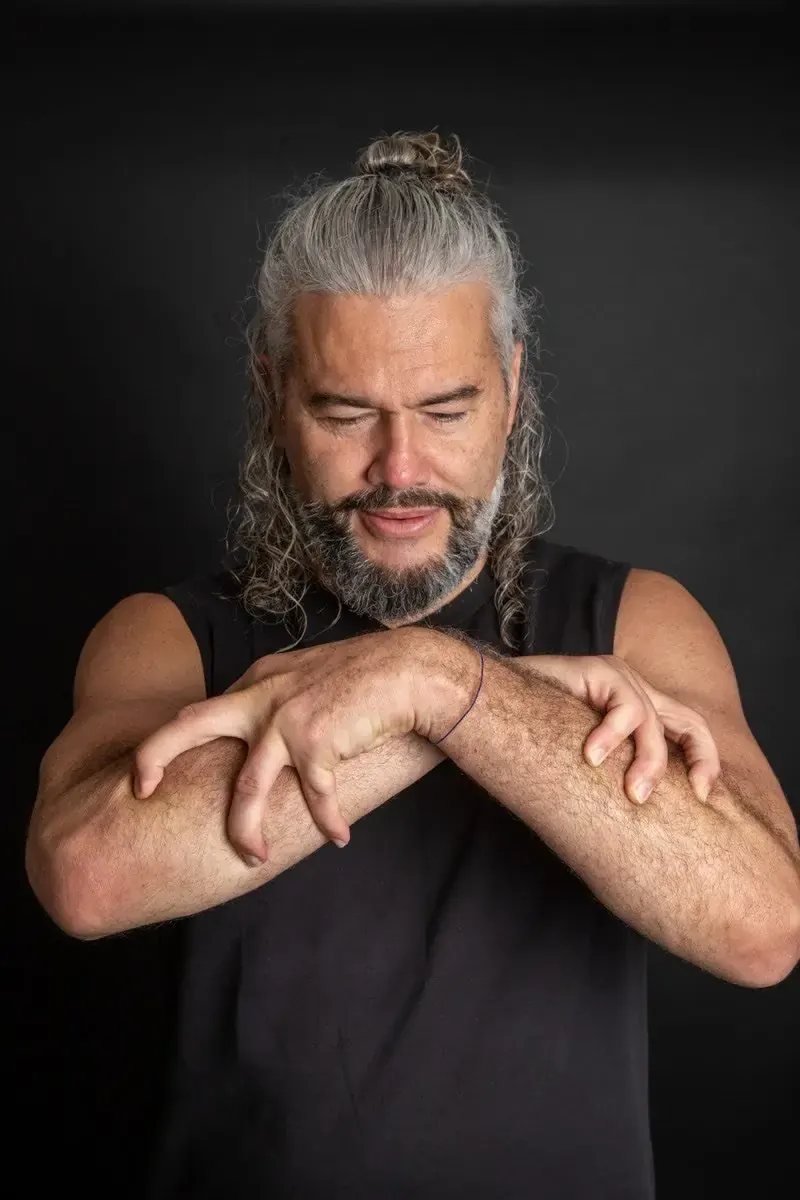
Written by the Body Awakening Journey team. The Body Awakening Method was developed by Mario Zinou over 20+ years of research and practice and more than 15,000 client sessions. This article is educational and isn’t medical advice.
 The complete e-book
Body Awakening
Essentials