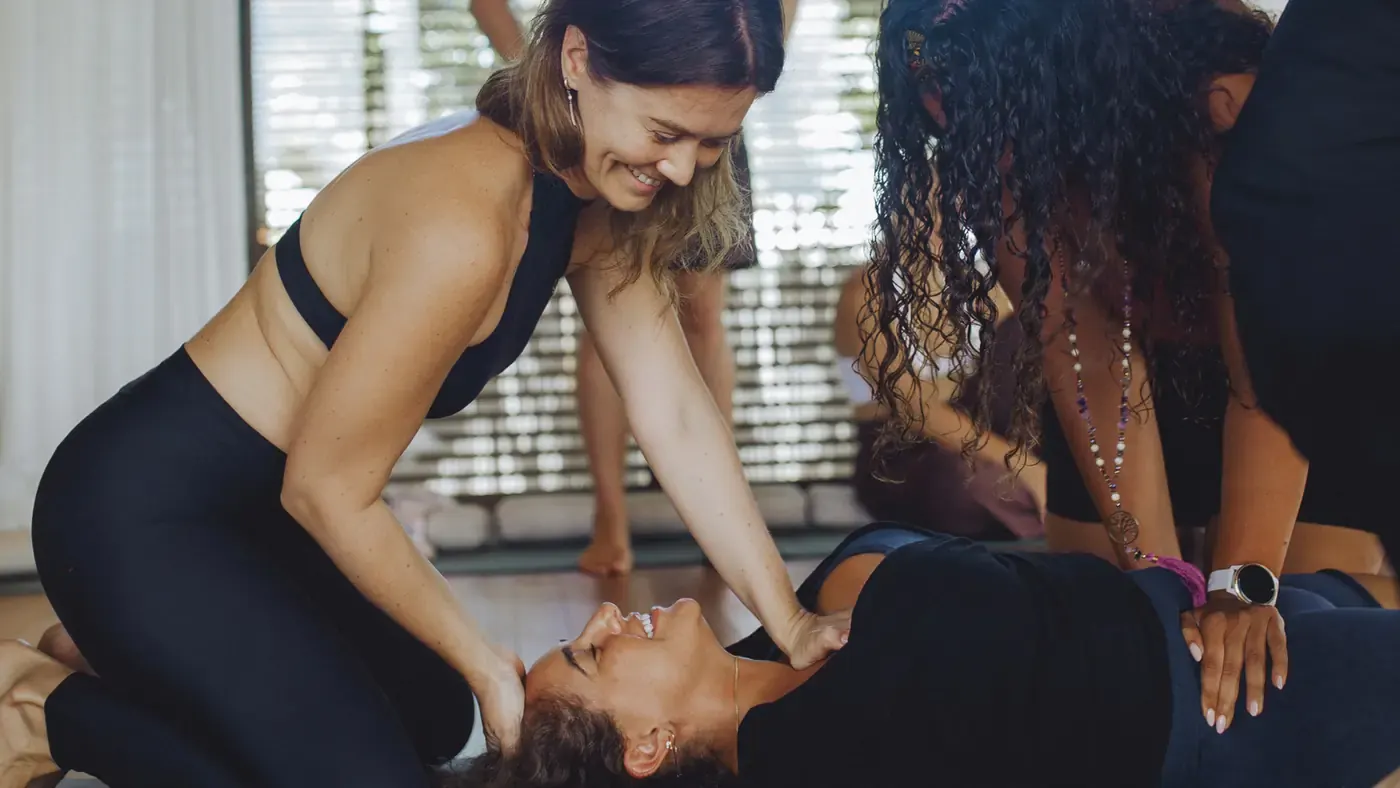
 Body Awakening Journey

Most of us live in our heads. We notice our body only when it hurts: a stiff neck after a long day at the screen, a tight lower back, a jaw that has been clenched for hours. Somatic exercises reverse that. They teach you to listen to your body before it has to shout.
Quick answer
Somatic exercises are slow, gentle movements done with your full attention on how your body feels from the inside. Instead of pushing into a stretch or a workout, you move slowly, breathe and notice sensation, which helps tight muscles let go and a stressed nervous system settle. For beginners, 10 minutes a day is enough to start feeling calmer and less stiff.
In this guide you will learn what somatic exercises are, how they differ from stretching or a workout, and a simple 10-minute routine you can do at home today, with no equipment and no experience.
What are somatic exercises?
“Somatic” comes from the Greek word soma, meaning “the living body”. Somatic exercises are movements done slowly and mindfully, with attention on internal sensation rather than on how the movement looks or how far you can go.
The idea is simple. Many of the tension patterns we carry are habits: the body holds a muscle tight for so long that it forgets how to relax it. Slow, aware movement helps you feel those patterns again, and once you can feel them, you can begin to release them.
Somatic exercises draw on several traditions, including the work of Thomas Hanna, the Feldenkrais Method and body-based approaches to stress and emotional healing. At Body Awakening, we combine them with breath, touch and fascia release.
How somatic exercises are different from a workout
| Aspect | Somatic exercises | A typical workout |
|---|---|---|
| Speed | Very slow | Moderate to fast |
| Focus | How it feels inside | Reps, form, intensity |
| Effort | 30 to 50% of your maximum | Often close to your maximum |
| Goal | Release tension, calm the nervous system | Strength, fitness, flexibility |
| Feeling after | Lighter, calmer, more present | Energised or tired |
You do not need to choose one or the other. Many people find that a few minutes of somatic movement makes their other training feel easier.
Benefits of somatic exercises
People who practice somatic exercises regularly often notice:
- Less stiffness: muscles that were held tight out of habit begin to soften.
- A calmer nervous system: slow movement and long breaths help the body shift out of “always on”. If you often feel tired but wired, read 7 signs your nervous system is stuck in survival mode.
- Better body awareness: you start noticing tension early, before it turns into pain.
- Easier emotional release: stress and emotion are often held in the body. Gentle movement gives them space to move.
- Better posture without forcing it: when tension releases, the body finds a more natural position by itself.
Before you start
- Find a quiet space and lie on a mat, rug or bed. Wear comfortable clothes.
- Move slowly. Slower than feels normal. Speed hides sensation.
- Use half your effort. If a movement feels like a stretch or strain, do less.
- Breathe through your nose, with a slightly longer exhale than inhale.
- Stay curious. There is no right way to feel. Simply notice.
The 10-minute somatic routine for beginners
Arrive and scan (1 minute)
Lie on your back with your knees bent and feet flat on the floor. Close your eyes. Move your attention slowly from your feet up to your head and notice where you feel tight, heavy or numb. Do not try to change anything yet.
Belly breathing (1.5 minutes)
Place one hand on your chest and one on your belly. Breathe in through your nose for about 4 counts and feel your belly rise under your hand. Breathe out for about 6 counts and feel it fall. Let your chest stay quiet. This simple breath is one of the fastest ways to tell your body it is safe.
Slow neck melts (1.5 minutes)
With your head resting on the floor, slowly roll it to the right, as if it were melting into the ground. Pause, breathe, then roll it slowly to the left. Make each turn take at least 5 seconds. Notice if one side feels different from the other.
Shoulder shrug and release (1 minute)
On an inhale, slowly lift both shoulders up towards your ears. Hold for a moment. On a long exhale, lower them as slowly as you can, taking 5 to 8 seconds. Repeat 4 or 5 times. The slow lowering is where the release happens.
Pelvic tilts (1.5 minutes)
On an inhale, gently arch your lower back so it lifts slightly off the floor. On the exhale, slowly flatten your lower back into the floor by tilting your pelvis. Keep the movement small and smooth. This releases the muscles of the lower back and belly that many of us hold tight all day.
Knee drops (1.5 minutes)
With your feet a little wider than your hips, let both knees fall slowly to the right. Breathe there for a moment, then bring them back to the centre and let them fall to the left. Move slowly and let gravity do the work. This gently releases the hips, lower back and the sides of the body.
Rest and notice (2 minutes)
Stretch your legs out, or keep them bent if your back prefers. Let your arms rest by your sides. Scan your body again from feet to head. Notice what has changed: warmth, heaviness, more space to breathe. This pause is part of the practice. It is when your nervous system takes in the change.
The routine at a glance
| Step | Exercise | Time | Helps with |
|---|---|---|---|
| 1 | Arrive and scan | 1 min | Body awareness |
| 2 | Belly breathing | 1.5 min | Calming the nervous system |
| 3 | Slow neck melts | 1.5 min | Neck and jaw tension |
| 4 | Shoulder shrug and release | 1 min | Shoulder tension |
| 5 | Pelvic tilts | 1.5 min | Lower back stiffness |
| 6 | Knee drops | 1.5 min | Hips and lower back |
| 7 | Rest and notice | 2 min | Integration |
Start free
Discover Body Awakening
A free introduction to the Body Awakening Method, with short lessons on fascia, posture and body awareness.
How often should you do somatic exercises?
A short daily practice works better than one long session a week. Start with this 10-minute routine once a day, in the morning to begin the day softer, or in the evening to wind down before sleep. After two or three weeks, most people notice they catch tension earlier during the day and can release it with just a breath or a small movement.
Common beginner mistakes
- Moving too fast. If you finish a movement in under 3 seconds, slow it down.
- Trying too hard. Effort creates more tension. Aim for ease, not range.
- Skipping the rest. The pause at the end is where your body integrates the change.
- Judging what you feel. Tightness, emotion or nothing at all are all normal.
When to get professional support
Somatic exercises are gentle and safe for most people, but they are not a replacement for medical care. See a doctor or physiotherapist if you have sharp, worsening or unexplained pain, numbness or tingling, a recent injury or surgery, or if you are pregnant and new to exercise. If strong emotions or memories come up, go slowly, and consider working with a qualified therapist alongside your practice.
Frequently asked questions about somatic exercises
What are somatic exercises in simple terms?
Slow, mindful movements where you focus on how your body feels from the inside. They help release habitual tension and calm the nervous system.
Are somatic exercises good for beginners?
Yes. They are gentle, need no equipment or flexibility, and can be done lying down. This routine is designed for complete beginners.
How long does it take to feel a difference?
Many people feel calmer and less stiff after the first session. Lasting change usually comes after a few weeks of short, daily practice.
Can somatic exercises help with stress and anxiety?
Many people find that slow breathing and gentle movement help them feel calmer, because they support the body’s natural relaxation response. They work best alongside other support, not instead of it.
Are somatic exercises the same as stretching?
No. Stretching aims to lengthen a muscle. Somatic exercises aim to change how your nervous system holds that muscle, by moving slowly and with awareness.
Go deeper
Start free: Discover Body Awakening is a free introduction to the Body Awakening Method, with short lessons on fascia, posture and body awareness.
Release deeper tension: if this routine helped, Fascia Release for Beginners (€27) shows you how to release the connective tissue that holds tension in place, using touch, breath and movement. Learn more about it in What is fascia and why does it affect pain, posture and energy?
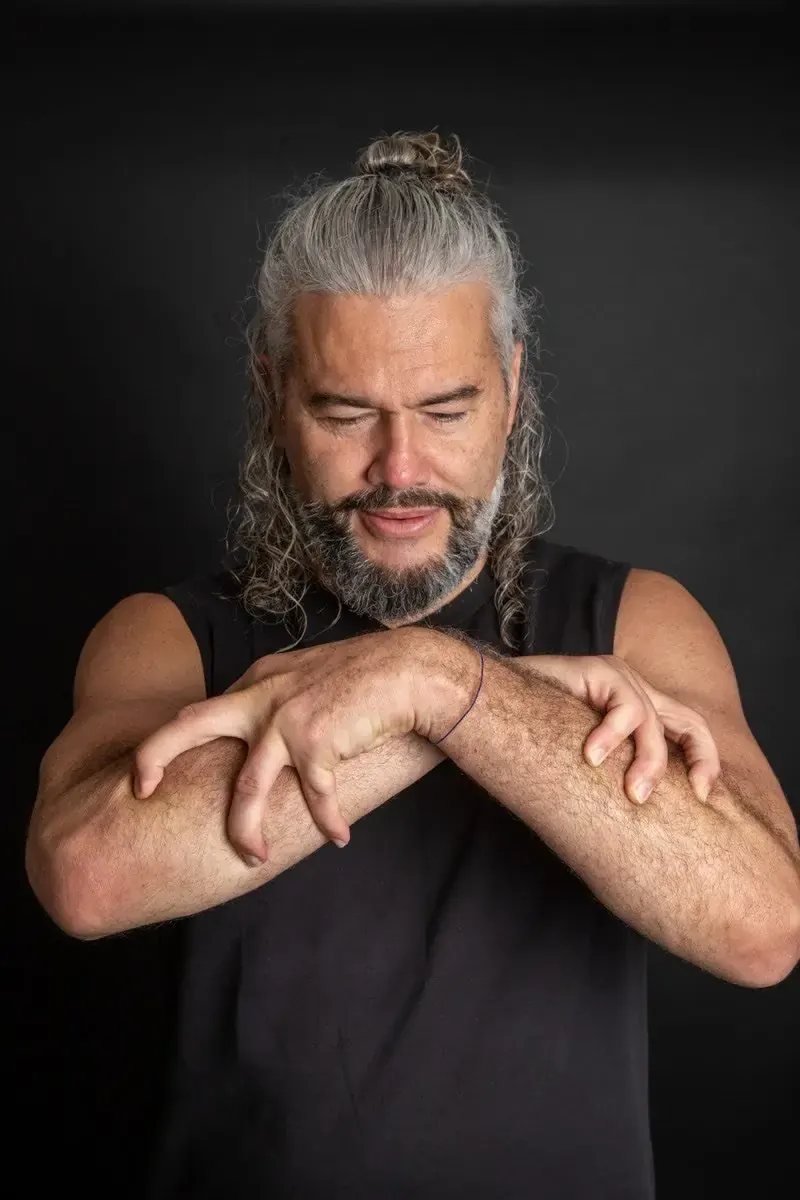
Written by Mario Zinou, founder of the Body Awakening Method, drawing on 20+ years of research and practice and more than 15,000 client sessions. This article is educational and isn’t medical advice.
 The complete e-book
Body Awakening
Essentials